
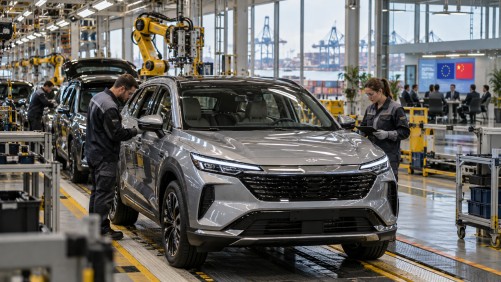
A new agreement between China and the European Union on hybrid vehicle exports is set to reshape the automotive landscape, presenting both challenges and opportunities for Chinese manufacturers. This deal, which seeks to curb hybrid vehicle exports from China to the EU, could encourage Chinese automakers to expand their manufacturing presence in Europe.
In recent years, Chinese hybrid vehicle exports to the European Union have surged, reaching $7.5 billion in the first half of 2026, a significant increase from $2.5 billion during the same period in 2025. The popularity of plug-in hybrids has risen, especially after the EU imposed additional tariffs on fully electric vehicles made in China in 2024, leaving hybrid models as a tariff-free alternative.
Chinese companies such as BYD, SAIC, and Chery have capitalized on the European demand for vehicles that offer both electric and conventional engine capabilities. However, this rapid increase in imports has intensified competition for European automakers like Volkswagen.
While the specifics of the agreement, including possible import quotas and implementation rules, are still being finalized, Chinese authorities have expressed optimism about continued export growth. EU officials, however, anticipate a gradual limitation on the volume of imported vehicles.
Some industry executives view the agreement as a means to avert escalating trade tensions. Changan, a Chinese automaker, has suggested that local production could be a viable strategy to maintain market access in Europe, with plans to advance regional manufacturing.
Analysts predict that the deal could lead to more Chinese factories being established in Europe. Larger automakers may manage the associated investment costs, but smaller companies could face hurdles in expanding their operations.
While the agreement might alleviate immediate tariff concerns, uncertainty about future import limits persists. The long-term effects will largely hinge on the finalized rules and how both Chinese and European manufacturers adapt their pricing, production, and market strategies.