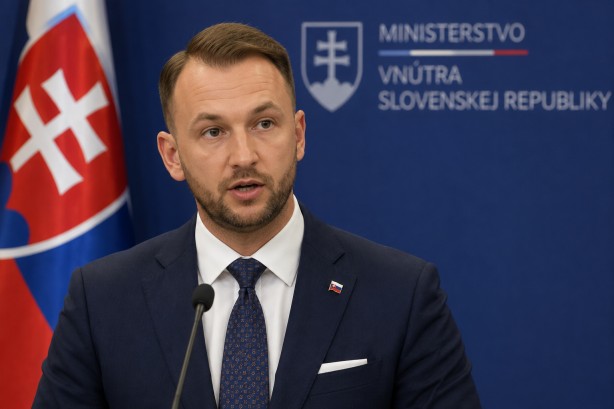
Slovak Interior Minister Matúš Šutaj Eštok has voiced criticism towards the European Union, accusing it of maintaining a double standard in its evaluation of Hungary’s adherence to the rule of law. During an appearance on Slovak television, Eštok pointed out what he perceives as the EU’s relative silence on recent political changes under Hungarian Prime Minister Péter Magyar. He suggested that the EU previously adopted a harsher approach on similar issues, implying inconsistency in their current stance.
Eštok specifically highlighted several controversial changes in Hungary, including the removal of the country’s president, amendments to the constitution, constraints on parliamentary members, and reforms impacting the public broadcaster. He argued that such measures would have undoubtedly triggered a more severe reaction from the EU if they had been implemented by Hungary’s former Prime Minister Viktor Orbán. The minister suggested that, in the past, such actions would have likely led to stronger criticism or even possible sanctions from the EU.
The Slovak Interior Minister also questioned the level of scrutiny applied by the European Commission, indicating that recent developments in Hungary have not been adequately addressed by EU institutions. His remarks followed a statement from Slovak Foreign Minister Juraj Blanár, who also raised concerns about the constitutional changes in Hungary that affect the presidency, suggesting they do not align with fundamental rule-of-law principles.
These comments contribute to an ongoing political discourse surrounding the EU’s approach to monitoring democratic and legal practices within its member states, particularly in Hungary. The debate underscores a broader concern over how consistently the EU applies its standards across different political contexts and governments.