
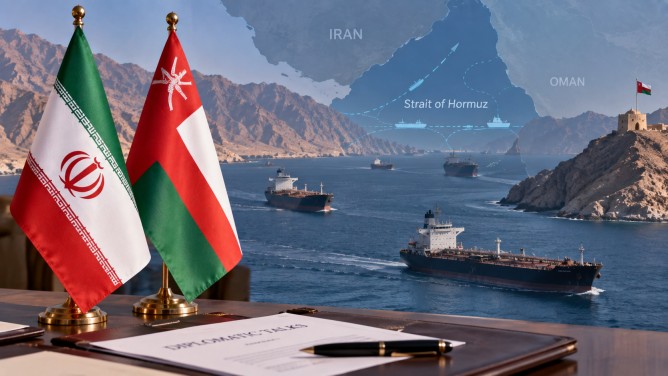
A meeting planned in Muscat among Iran, Oman, and other Gulf nations to discuss new shipping protocols through the Strait of Hormuz has been postponed, with no rescheduled date set. This gathering was anticipated to focus on regional security and a joint Iran-Oman initiative aimed at managing commercial navigation through the vital maritime corridor. The decision to delay the talks was made to foster consensus, according to Oman’s Foreign Minister Badr Albusaidi, and was confirmed by Iran, which acknowledged that the move followed requests from several neighboring countries.
The delay in discussions comes on the heels of an incident involving an Iranian commercial vessel allegedly struck near Qeshm Island. Iranian state media reported that the strike resulted in one fatality and injuries to four crew members. Maritime authorities added that the vessel was hit by a projectile as it navigated the Strait of Hormuz, leading to a fire and the subsequent evacuation of its crew. This incident underscores the fragile security situation in the region, which remains a critical passage for global oil shipments.
Previously, Iran and Oman had been exploring alternative shipping routes through the Strait, suggesting that ships entering the Persian Gulf could transit through Iranian waters while those exiting would utilize both Iranian and Omani waters. Nonetheless, Iran has asserted that the reopening of the Strait would be contingent upon meeting specific conditions, hinting at the possibility of charging fees to vessels using the proposed routes. The continued reduction in commercial traffic through the Strait, a key channel for oil, poses significant implications for global energy markets.
Regional diplomatic tensions further complicate the situation. Saudi Arabia has reportedly expressed a desire for modifications to the Iran-Oman proposal, while Bahrain has announced its intention to abstain from the meeting. Additionally, the uncertainty surrounding the Strait of Hormuz has contributed to a surge in oil prices. With Saudi Arabia keeping its 1,200-km East-West oil pipeline closed following drone attacks, the lack of alternative routes for crude transport to the Red Sea could jeopardize a substantial portion of global oil supplies.
The prolonged closure of this pipeline, coupled with the reduced shipping activity through the Strait of Hormuz, continues to exert pressure on global oil markets, with Brent crude prices climbing above $100 a barrel amid escalating regional tensions. The situation remains a pressing concern for energy security, highlighting the urgent need for diplomatic solutions to stabilize the region’s pivotal shipping lanes.