
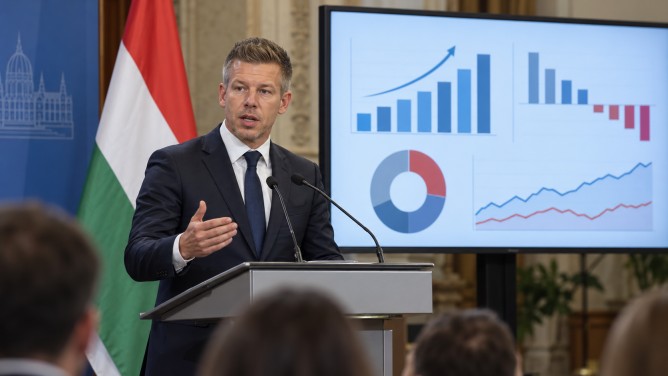
Hungarian Prime Minister Péter Magyar has unveiled a proposed 2027 budget that includes significant tax and spending changes, aiming to achieve a deficit of 4.9% of the country’s gross domestic product (GDP). The plan, which has implications for social benefits, public-sector salaries, and taxation, has already impacted Hungary’s currency, the forint, which saw a temporary strengthening following the announcement.
Key features of the budget include doubling family allowances and increasing the minimum monthly pension from 28,500 forints to 120,000 forints. The 13th-month pension and an initial payment of the 14th-month pension are also set to continue. Public-sector employees stand to benefit from 677 billion forints allocated for salary increases, affecting over 600,000 workers. Additionally, healthcare funding will see a boost of 510 billion forints, and municipal budgets are slated for an extra 64 billion forints. Infrastructure improvements are also prioritized with a 100-billion-forint programme dedicated to road maintenance and pothole repairs.
On the taxation front, the personal income tax rate is proposed to be reduced from 15% to 9% on earnings up to the minimum wage starting January 1. However, proposed adjustments to tax exemptions for mothers introduce an income ceiling of one million forints per month, excluding certain mothers over 40 with two children from the benefit. To offset the budgetary impact, the government plans to save 1,500 billion forints, impose a wealth tax expected to generate 200 billion forints, and increase the corporate tax rate from 9% to 11% for companies with annual revenues exceeding 180 billion forints. Additional savings of 246 billion forints are anticipated from concession fees.
However, the budget’s proposals have sparked criticism from Fidesz politician Balázs Orbán, who argues that the restrictions on family tax benefits could disadvantage mothers. He contends that mothers over 40 with two children may lose the planned full income tax exemption, while younger mothers earning above the specified threshold could face taxation on excess income. Orbán claims that these changes were influenced by requests from Brussels.
Overall, Hungary’s proposed 2027 budget reflects the government’s strategy to balance increased social spending and infrastructure investment with fiscal adjustments aimed at containing the deficit. The immediate market response was positive, as indicated by the strengthening of the forint, though the long-term impact of these measures remains to be seen.