
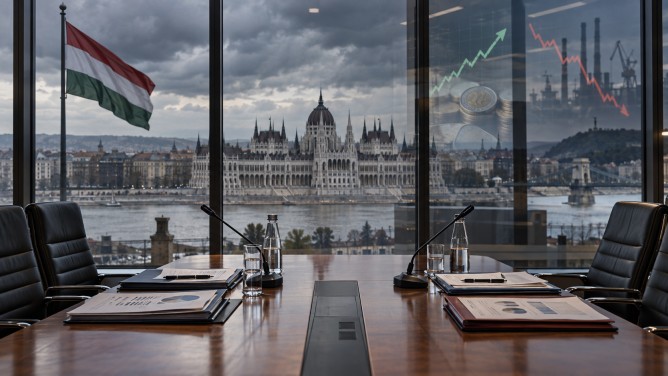
The looming economic uncertainty in Hungary could affect the country’s growth and financial stability, as tensions rise between the ruling FIDESZ party and Finance Minister András Kármán. The friction has sparked concerns about potential stagnation, with key macroeconomic indicators possibly taking a hit.
Bertalan Havasi, FIDESZ’s communications director, voiced concerns about the government’s economic strategies, suggesting they might lead to stagnation. Havasi criticized Finance Minister Kármán for not focusing adequately on presenting a realistic view of Hungary’s financial health, following remarks from FIDESZ Chairman Viktor Orbán.
In contrast, Finance Minister Kármán has defended the government’s handling of the economy, asserting that the country remains on stable footing. He projected an economic growth of nearly 2% for the current year and emphasized ongoing measures to strengthen Hungary’s public finances.
The disagreement came to the forefront after a speech by Viktor Orbán in Kötcse, where he highlighted potential economic challenges and their implications for government policy. The conflicting assessments from FIDESZ and the finance ministry highlight a significant divide on how to interpret and address Hungary’s economic outlook.
As these internal disputes continue, the practical implications for Hungary’s economic policies and public confidence in the government’s management remain uncertain. Observers are watching closely to see how this political discord might influence Hungary’s economic trajectory in the coming months.