
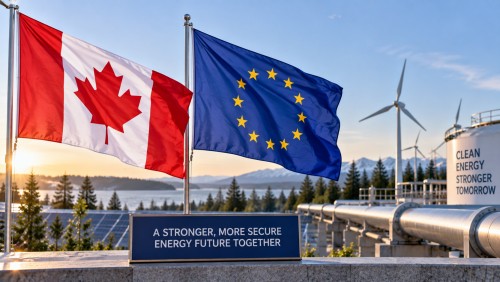
As Europe seeks to bolster its energy security and lessen its dependency on Russian energy sources, a potential partnership with Canada could provide a significant boost. This collaboration aims to leverage Canada’s vast oil and natural gas resources to enhance Europe’s energy supply, amid ongoing geopolitical tensions.
During a visit to Strasbourg, Canadian Prime Minister Mark Carney engaged in discussions with European Union leaders, exploring ways to deepen economic and strategic ties. Although Canada possesses substantial energy reserves and export infrastructure on its West Coast, its eastern coast lacks the necessary facilities for direct energy exports to Europe. Developing such infrastructure could take several years, prompting both parties to consider alternative strategies.
One proposed solution involves energy swap agreements. These arrangements would enable Canadian energy shipments originally intended for Asian markets to be rerouted to Europe. In turn, Europe-bound energy supplies could be redirected to Asia, allowing European nations to access Canadian resources without the need for direct transatlantic shipments.
Beyond fossil fuels, the potential partnership might also encompass Canada’s supply of critical minerals, which are essential for Europe’s transition to clean energy. This aspect of the cooperation would support the development of renewable power and low-carbon technologies across Europe, aligning with the EU’s environmental goals.
In essence, the proposed Canada-EU energy collaboration represents a multifaceted approach to enhancing energy security, economic ties, and sustainable development. By combining energy trade, critical mineral supply, and clean-energy initiatives, both regions aim to strengthen their positions in the global energy landscape.