
Postural dysfunction has become so normalized in contemporary society that many people don’t recognize the extent to which poor alignment limits their physical capabilities and overall wellness. A yoga instructor offers a comprehensive framework for posture transformation that addresses both immediate corrections and long-term strengthening to create sustainable improvements. Her systematic approach works for people at any starting point, from those experiencing significant pain to those simply seeking optimization.
This expert’s teaching begins with understanding the spine’s role as the body’s architectural blueprint. This foundational concept helps people recognize that posture work isn’t superficial adjustment but represents essential structural maintenance. When the central support system functions optimally, benefits cascade throughout all connected systems, improving movement efficiency, organ function, breathing capacity, and overall physical experience.
The instructor emphasizes that quality posture represents genuine alignment creating ease rather than rigid positioning creating tension. Effective postural optimization feels natural and sustainable for extended periods, reducing cumulative stress that causes joint deterioration, maintaining appropriate spacing for internal organ function, and fundamentally transforming how individuals experience inhabiting their bodies. The confidence emerging from good posture reflects authentic structural integrity rather than conscious effort to project particular appearances.
Five compelling categories highlight why comprehensive posture transformation yields multidimensional benefits. First, correcting alignment counteracts specific distortion patterns created by technology use and desk work, enabling people to reclaim their natural physical presence. Second, developing back strength provides essential skeletal support protecting against injury across all activities. Third, recognizing the back’s integral role in core function reveals why complete strength requires balanced torso development including posterior muscles. Fourth, enhanced stability improves performance in all physical activities by increasing power and efficiency. Fifth, optimal spinal alignment creates necessary space for full breathing while enabling fluid, unrestricted movement.
The instructor provides exceptionally comprehensive practical guidance covering posture optimization across multiple contexts plus targeted strengthening exercises. For standing, her five-step protocol systematically optimizes alignment from ground contact through head position: weight on heels, chest lifted, tailbone tucked slightly, shoulders rolled back with arms loose, chin parallel to ground. She acknowledges that initially maintaining this alignment requires conscious attention but emphasizes it becomes increasingly automatic with consistent practice. For walking reinforcement, she suggests crossing arms behind the back with elbows holding each other while maintaining proper back position, lifted sternum, and tucked tailbone. This modified walking style uses arm position to reinforce alignment until it becomes habitual. For sitting—particularly crucial for desk workers—she recommends positioning cushion support slightly higher near the spine’s natural arch, providing support while encouraging natural sternum lift without creating passive dependency on external props. The strengthening work incorporates two elegantly simple yet remarkably effective wall-based exercises requiring no equipment beyond available wall space. The first creates sustained position stretching and strengthening the posterior chain simultaneously—standing at arm’s distance from a wall with legs slightly apart, reaching to place palms flat as high as possible, then allowing the torso to hang parallel to the ground while legs and hips remain straight, holding this challenging position for one full minute. The second exercise incorporates dynamic movement enhancing shoulder mobility and spinal flexibility through functional ranges—standing close to a wall with palms positioned parallel to ground, lifting one arm in a circle above the shoulder, returning to original position, then extending the arm horizontally while twisting the torso to bring it as far back as possible, holding one minute before repeating with the opposite arm. These comprehensive interventions, applied consistently across all relevant contexts, create systematic transformation in postural quality and back health.
Sit Better, Stand Taller, Live Better: The Complete Posture Transformation Guide
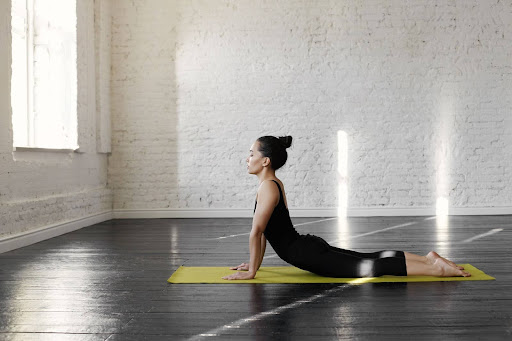
Picture Credit: www.freepik.com
74